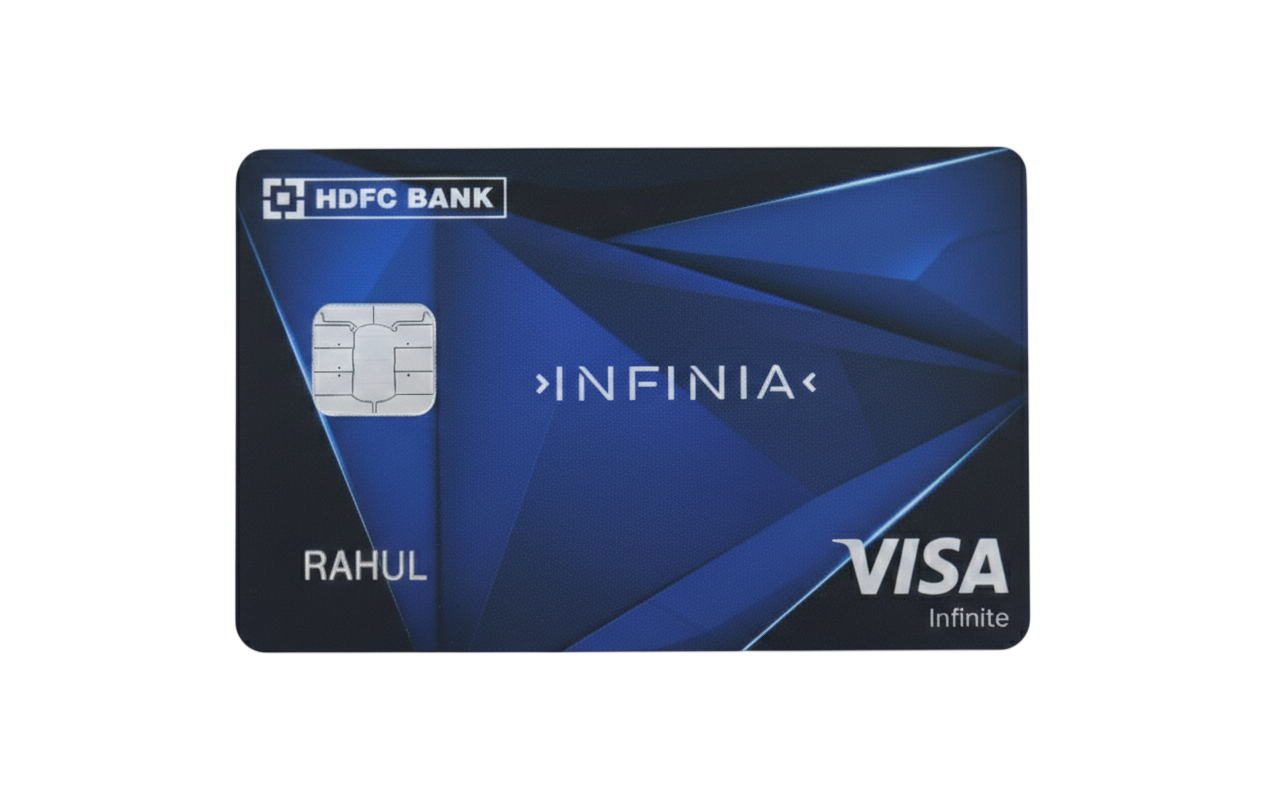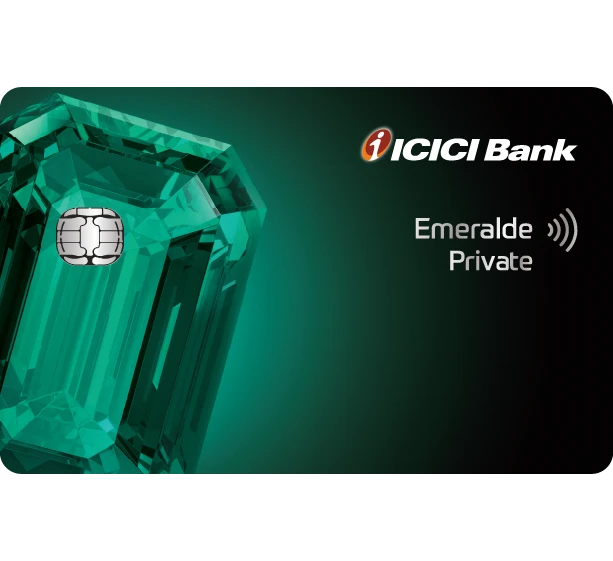
HDFC Infinia vs ICICI Emeralde Private Metal. Two invite-only cards. Both claim to be India's best.
Let me settle this.
The answer is more nuanced than most comparisons suggest. It depends on how you spend, where you redeem, and how much you trust each bank to maintain value over time.
The fee structure
Both cards charge Rs 12,500 plus 18% GST (approximately Rs 14,750 total) as joining and annual fee.
Both waive the annual fee at Rs 10 lakh annual spend.
Both provide 12,500 reward points as joining/renewal benefit if the fee is charged.
On fees, these cards are essentially identical.
Base reward rate
HDFC Infinia gives 5 reward points per Rs 150 spent on most categories. That is 3.3% return at Rs 1 per point redemption value.
ICICI EPM gives 3 reward points per Rs 100 spent. That is 3% return at Rs 1 per point.
Infinia wins by 0.3% on base earn. On Rs 10 lakh annual spend, that is Rs 3,000 difference. Meaningful but not decisive.
Accelerated rewards: Where it gets interesting
Through HDFC SmartBuy:
- Hotels: 33% return (10x points)
- Flights and vouchers: 16.5% return (5x points)
Through ICICI iShop:
- Hotels: 36% return (12x points)
- Flights and vouchers: 18% return (6x points)
EPM wins on accelerated categories. The difference is approximately 3% on hotels and 1.5% on flights/vouchers.
For someone spending Rs 2 lakh annually on accelerated categories, EPM's advantage is Rs 4,000-6,000.
The redemption flexibility problem
Here is where HDFC has a clear advantage.
HDFC SmartBuy caps redemption at 70% of booking value with points. The remaining 30% must be paid by card.
ICICI iShop allows 100% redemption with points on flights and 90% on hotels.
Wait, EPM seems better here too?
Not so fast. SmartBuy's 70% cap means you continue earning points on the 30% cash portion. You are always accumulating. iShop's 100% redemption means you earn nothing on fully redeemed bookings.
For point hoarders who want to save for aspirational redemptions (business class flights to Europe, premium hotels in Maldives), the HDFC model actually works better over time.
Transfer partners: The decisive factor
HDFC Infinia transfers to:
- Singapore Airlines KrisFlyer (1:1)
- Air India Flying Returns (1:1)
- British Airways Executive Club (1:1)
- Air France-KLM Flying Blue (1:1)
- InterMiles
- Marriott Bonvoy (varies)
- ITC Hotels
ICICI EPM transfers to:
- Air India Maharaja Club (1:1)
- That is it. For now.
This is not even close. HDFC Infinia's transfer partner network enables redemptions that EPM simply cannot match.
Example: Bangalore to Bali in Business Class via Singapore Airlines. Using KrisFlyer miles, you can book this for 47,500 miles one way on Singapore Airlines or partner airlines. With Infinia's 1:1 transfer to KrisFlyer, you can accumulate these points through normal spending and transfer them for an aspirational redemption.
Example: Business Class from Bali to Sydney on Air France's partners. Using Flying Blue miles, this can be booked for 29,500 miles during promo periods.
These redemption opportunities do not exist with EPM. Air India has notoriously poor award availability. You can have millions of Flying Returns points and still not find seats on the routes you want.
For travelers who value flexibility and aspirational redemptions, Infinia wins decisively on transfer partners.
The stability question
I covered this in detail in the ICICI devaluation article, but it bears repeating.
ICICI devalued iShop multiple times within months of launch:
- Voucher purchase limits reduced from Rs 1 lakh to Rs 12,000
- Processing fees added on popular vouchers
- Reward rate adjustments
HDFC SmartBuy has been stable for years. The accelerated categories, caps, and redemption rules have remained largely consistent. Yes, HDFC makes changes too, but not at ICICI's pace.
When you are earning and saving points for big redemptions that might take years to accumulate, stability matters. You do not want to wake up one morning and find your points are worth 30% less than yesterday.
For long-term point accumulation strategies, HDFC's track record is better.
The add-on card situation
EPM allows add-on cards for children above 12 years. This is unusual and genuinely useful for families who want to consolidate household spend on one card for accelerated earning.
Infinia has standard add-on policies (spouse, parents, adult children).
If you have teenagers whose spending you want to track and earn rewards on, EPM's family-friendly add-on policy is an advantage.
The lifestyle benefits comparison
HDFC Infinia:
- Club Marriott membership (20% off dining and rooms at Marriott properties)
- ITC Hotels benefits (complimentary buffet, discounted stays)
- Unlimited domestic and international lounge access
- Golf access through Diners Club network
- 2% forex markup + Global Value Program (additional 1% cashback on international spends)
ICICI EPM:
- Taj Epicure membership (25% off on food and beverages at Taj properties)
- EazyDiner Prime (dining discounts at 3000+ restaurants)
- BookMyShow BOGO (buy one get one on movie tickets)
- Unlimited domestic and international lounge access
- 2% forex markup
Both cards offer strong lifestyle benefits. The choice depends on whether you prefer Marriott/ITC or Taj hotels, and whether movie tickets or golf access matters more to you.
The global value program edge
HDFC's Global Value Program (GVP) is an underrated benefit. For Rs 235 annually, you earn additional 1% cashback on all international transactions up to Rs 12,000 per year.
Combined with the base 3.3% earn rate, Infinia cardholders get approximately 4.3% effective return on international spend.
EPM offers 2% forex markup with no additional cashback program. The effective return on international spend is 3% minus the forex cost.
For international travelers who spend Rs 5 lakh+ annually on forex transactions, Infinia with GVP is clearly superior.
The earning caps
- HDFC Infinia caps accelerated rewards at 15,000 bonus points per month.
- ICICI EPM caps accelerated rewards at 18,000 bonus points per month.
EPM's higher cap benefits ultra-high spenders who book Rs 2 lakh+ monthly in hotels and flights. For most people, neither cap will be a binding constraint.
So which one should you get?
Neither. If you are spending 18-20 lakhs a year, Axis Magnus Burgundy is what you should be chasing.
Kidding. Sort of. Magnus does have exceptional value for ultra-high spenders. But it is even harder to get than Infinia or EPM.
If you must choose between these two:
Choose HDFC Infinia if:
- You value transfer partner flexibility for aspirational redemptions
- You want stability and predictable long-term value
- You travel internationally frequently
- You prefer Marriott/ITC hotels over Taj
- You want a well-established ecosystem (SmartBuy has been around for years)
Choose ICICI EPM if:
- You are a heavy iShop user and can maximize the higher accelerated rates
- You prefer Taj hotels and can use Taj Epicure membership
- You can live with ICICI's unpredictability
- You have teenagers whose spending you want to consolidate
- You spend heavily on hotels where the 36% vs 33% difference adds up
My actual recommendation
If you can get both, get both.
Many high spenders hold Infinia for transfer partner access and long-term point accumulation. They hold EPM for higher accelerated earn on specific categories.
Use Infinia for regular spend to build transferable points. Use EPM for hotel bookings on iShop where the 36% return exceeds SmartBuy's 33%. Transfer Infinia points to Singapore Airlines or Flying Blue when you have an aspirational redemption in mind.
Check the detailed comparison for feature-by-feature breakdown.
The final word
Devaluations are coming to everything this year. ICICI has already shown their hand. HDFC will likely make adjustments too.
The question is whether you want to collect as many points as possible for that business class redemption. Or sit with invite-only cards and redeem for cashback.
Points are a currency. Currencies can be devalued. Spend them while they have value, or transfer them to programs you trust.
Choose wisely.
FAQs
Which is better - HDFC Infinia or ICICI Emeralde Private Metal?
HDFC Infinia is better for most users due to stable rewards, more transfer partners (Singapore Airlines, British Airways, Marriott), and consistent SmartBuy portal. ICICI EPM offers higher hotel returns but has devaluation risk.
What is the income requirement for HDFC Infinia?
HDFC Infinia requires minimum Rs 30 lakh annual income or Rs 3 crore+ relationship value with HDFC Bank. It is invite-only and not available through direct applications. Consider HDFC Diners Club Black as an alternative.
Can you get both HDFC Infinia and ICICI Emeralde?
Yes. Many premium cardholders hold both cards and use each for optimal categories. Use Infinia for SmartBuy flights and international spend, EPM for iShop hotels. This maximizes returns while hedging against devaluation risk.
What is the annual fee for HDFC Infinia?
Rs 12,500 plus GST (approximately Rs 14,750). The fee is waived if you spend Rs 10 lakh in the membership year. You receive 12,500 reward points on joining and each renewal, effectively making it free.
How many reward points does HDFC Infinia give per Rs 100?
HDFC Infinia gives 5 reward points per Rs 150 spent (3.3% return at 1 point = Rs 1). On SmartBuy portal, you earn 10x points on flights (16.5% return) and up to 10x on hotels (33% return).