Every credit card ranking in India is wrong. They prioritize annual fees or lounge access or brand prestige. They ignore what matters: reward rates, redemption value, and spending category alignment.
Here is the actual top 5, ranked by value delivered per rupee spent.
The Three-Way Tie for First Place
Three cards deliver approximately equal value for their target users. Your spending pattern determines which wins.
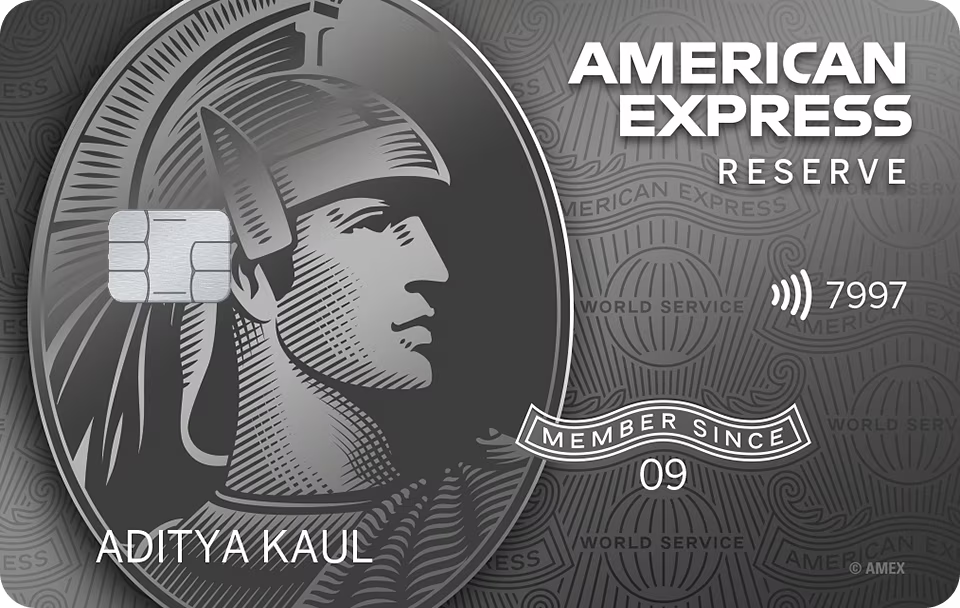
Amex Platinum Travel
Annual fee: Rs 5,000 (waived at Rs 4 lakh spend)
The Platinum Travel offers 10% rewards on travel spending up to Rs 4 lakh annually. That is 10 Membership Rewards points per Rs 100 spent on flights, hotels, and trains.
Those points transfer to British Airways Avios, Singapore Airlines KrisFlyer, and other programs. At conservative valuations, you earn 8-10% effective return on travel spending.
The fee waiver threshold is achievable. Rs 4 lakh annual spend means Rs 33,333 monthly. Many households hit this between flights, hotel bookings, and train tickets.
Best for: Travelers who book through Amex Travel or transfer partners. Families spending Rs 2-4 lakh annually on travel.
Axis Atlas
Annual fee: Rs 5,000 (first year free often available)
The Atlas card delivers 10% back on airlines and hotels. It earns 10 Atlas Edge Reward Points per Rs 100 at airlines and 5 points per Rs 100 at hotels.
Edge Miles transfer 1:1 to over 15 airline programs including Singapore Airlines, United, and Emirates. The transfer partners list rivals premium international cards.
Unlike Amex, Axis has full domestic acceptance. Every shop, every website, every payment gateway works. No merchant declines.
Best for: Frequent flyers who want airline mile flexibility. International travelers booking directly with airlines and hotels.
HSBC TravelOne
Annual fee: Rs 2,999 (waived at Rs 2.5 lakh spend)
HSBC TravelOne offers flat 3% rewards on all international spending. It provides 2% on domestic spending above Rs 1.5 lakh annually.
The rewards work as statement credit against travel bookings. No transfer partner complexity. No point valuations to calculate. Spend, earn, redeem.
The Rs 2.5 lakh fee waiver threshold is the lowest among premium travel cards. The card also waives foreign transaction fees entirely.
Best for: International travelers. Simplicity seekers who dislike point programs. Cardholders with moderate annual spend.
Why They Tie
Each card excels in different scenarios:
- Amex Platinum Travel wins on travel-specific earn rates (10%)
- Axis Atlas wins on transfer partner flexibility and acceptance
- HSBC TravelOne wins on simplicity and international usage
A cardholder spending Rs 3 lakh on travel earns approximately Rs 24,000-30,000 value across all three cards. The winner depends on whether you value Amex travel partners, Axis airline programs, or HSBC simplicity.
All three cards cost Rs 3,000-5,000 annually with fee waivers at reasonable thresholds. None requires ultra-premium spend levels.
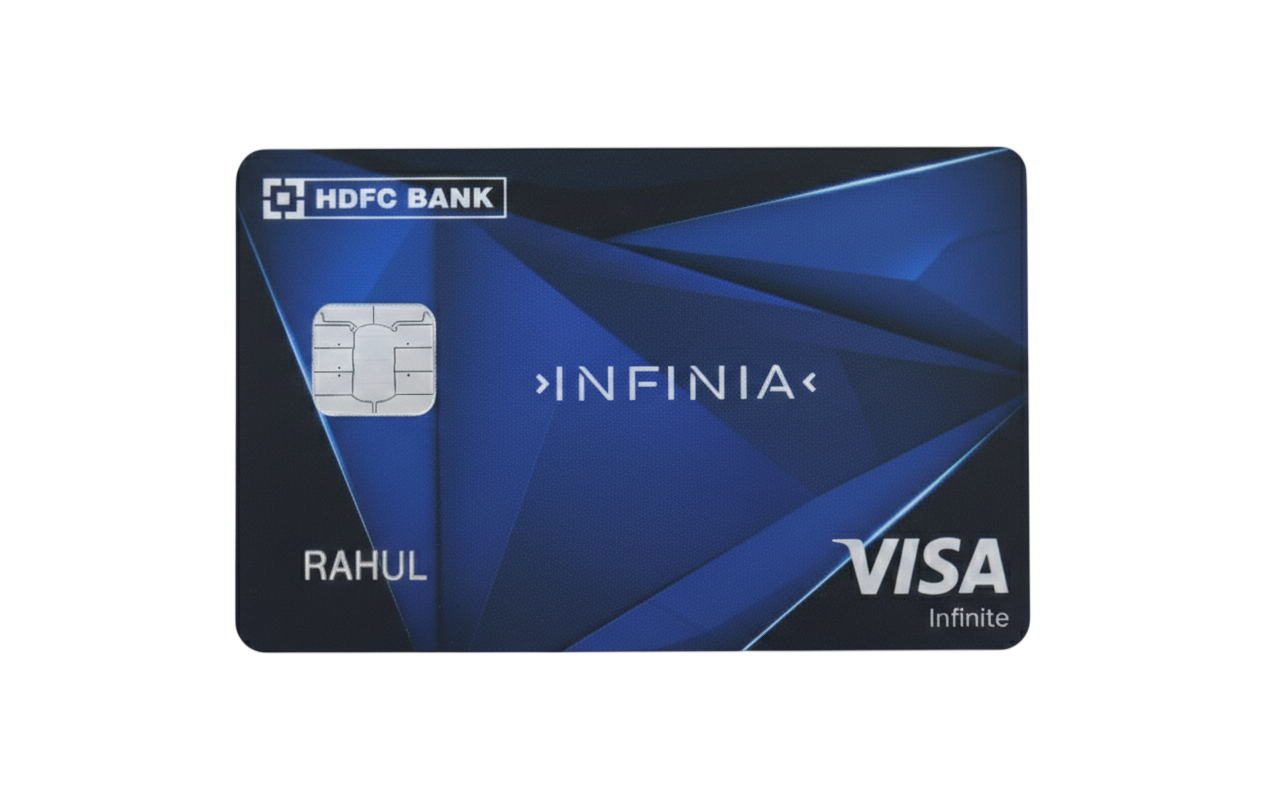
Fourth Place: HDFC Infinia
Annual fee: Rs 12,500 (invite only)
The HDFC Infinia remains India's most coveted credit card. It earns 5 reward points per Rs 150 spent, translating to 3.3% base return.
Infinia points transfer to 10+ airline programs at excellent ratios. The card includes unlimited airport lounge access, golf privileges, and concierge service.
Key advantages:
- 15,000 bonus points monthly cap (higher than competitors)
- SmartBuy accelerators for additional multipliers
- Best-in-class voucher redemption rates
- Widest HDFC ecosystem integration
The catch: you cannot apply for Infinia. HDFC invites existing customers based on relationship value. Typical threshold is Rs 10+ lakh annual spend or Rs 50+ lakh in HDFC assets.
For those who qualify, Infinia delivers consistent 3.3% returns with transfer partner upside to 5-8% on sweet spot redemptions.
Best for: High spenders with HDFC relationships. Mile collectors seeking program flexibility. Premium cardholders wanting concierge and lifestyle benefits.
Why Fourth and Not Higher
Infinia ranks fourth because:
- Inaccessibility - Most people cannot get it
- Opportunity cost - Rs 12,500 fee requires Rs 4+ lakh spend to break even
- Complexity - Maximizing value requires SmartBuy strategies and transfer knowledge
The top three cards deliver comparable value with simpler mechanics and broader accessibility.
Fifth Place: Diners Club Black
Annual fee: Rs 10,000
The Diners Club Black earns 5 reward points per Rs 150, identical to Infinia's 3.3% rate. It offers the same transfer partners and similar benefits.
Key differences from Infinia:
- Lower monthly bonus cap (7,500 vs 15,000 points)
- Acceptance issues at some merchants
- Easier to obtain than Infinia
- Includes international lounge access (Priority Pass)
Diners Club Black serves as the accessible alternative to Infinia. If HDFC will not issue you an Infinia, this card delivers 90% of the value.
The acceptance gap is narrowing but real. Some international merchants and older Indian POS terminals reject Diners cards. Carry a backup Visa/Mastercard.
Best for: High spenders who cannot get Infinia. International travelers valuing Priority Pass. Reward optimizers comfortable with occasional acceptance issues.
The Cards That Did Not Make The List
Several popular cards failed to rank:
HDFC Regalia: Earns only 4 points per Rs 150 (2.6% vs Infinia's 3.3%). The lower rate compounds into thousands of rupees in lost value annually.
Amex Platinum Charge: Rs 60,000 fee is unjustifiable for most Indian cardholders. The hotel status and credits rarely offset the cost.
SBI Elite: Poor redemption options and limited transfer partners despite reasonable earn rates.
Axis Magnus: Recent devaluations reduced Edge Mile earn rates. The card no longer competes with Atlas on travel value.
How To Choose Among The Top 5
Answer three questions:
1. What is your annual spending?
- Under Rs 3 lakh: HSBC TravelOne (lowest fee waiver threshold)
- Rs 3-8 lakh: Amex Plat Travel or Axis Atlas
- Over Rs 8 lakh: HDFC Infinia or Diners Black
2. Where do you spend most?
- Travel focused: Amex Plat Travel
- Airline loyalist: Axis Atlas
- Mixed spending: HDFC Infinia/Diners Black
- International heavy: HSBC TravelOne
3. How much complexity can you handle?
- Want simplicity: HSBC TravelOne
- Comfortable with transfers: Any of the others
- Expert optimizer: Infinia with SmartBuy strategies
Building The Optimal Wallet
The best strategy combines multiple cards:
Core card: HDFC Infinia or Diners Black for base spending (3.3%)
Travel card: Amex Plat Travel or Axis Atlas for flights and hotels (10%)
International card: HSBC TravelOne for forex spending (3% plus no FX fee)
This three-card setup captures maximum value across all categories. Total annual fees run Rs 15,000-25,000 but generate Rs 50,000+ in rewards for moderate spenders.
The Bottom Line
India's credit card market offers genuine value if you choose correctly. The top five cards return 3-10% on spending depending on category. Annual fees pale against the rewards generated.
Stop choosing cards by brand prestige or lounge count. Start choosing by reward rates and spending alignment. The numbers do not lie.
FAQs
Q: Can I get all five cards simultaneously? A: You can hold Amex, Axis, HSBC, and HDFC cards together. Diners Black and Infinia are both HDFC products, so you typically get one or the other based on eligibility. There are no cross-issuer conflicts.
Q: Which card should I get first if I am starting out? A: HSBC TravelOne has the lowest barrier (Rs 2.5 lakh spend for fee waiver) and simplest mechanics. Axis Atlas first-year-free offers also make it accessible for beginners.
Q: Why did Axis Magnus not make the list? A: Multiple devaluations reduced Edge Mile earn rates significantly. The Atlas now offers better value for travel spending despite the lower annual fee.
Q: Is the Amex acceptance issue really that bad? A: Amex acceptance is 70-80% in urban India. Major retailers, airlines, and hotels accept it. Small merchants and some online platforms do not. Always carry a backup Visa/Mastercard.
Q: How do I get invited for HDFC Infinia? A: Build an HDFC relationship through savings accounts, fixed deposits, or existing credit cards. Typical invite thresholds are Rs 10+ lakh annual card spend or Rs 50+ lakh in bank assets. There is no application process.